

A Geophysis proprietary technology
GateKeeper
Let the light in.
Keep the heat out.
A new approach to architectural solar control. Designed to keep exceptional visible-light transparency while selectively managing unwanted ultraviolet and infrared solar energy.
Electromagnetic management in the building envelope
Sunlight arrives as one beam. GateKeeper is designed to treat it as three.
- Visible light
- Admitted. Natural, undistorted daylight and a clear view out.
- Ultraviolet
- Managed. Less of the energy that fades interiors and furnishings.
- Infrared
- Managed. Less of the energy that arrives as heat, for the potential of lower solar heat gain and lower cooling demand.
And in the other direction
- Interior warmth
- Let out. Designed to let heat that builds up inside migrate back out through the envelope, so energy keeps moving through the building instead of accumulating in it.
Permissive to daylight on the way in. Transmissive to unwanted heat on the way out.
Built for the strongest sun
Transparency without the heat penalty.
The world's most memorable buildings are made of glass. In high-solar-irradiance regions such as the United Arab Emirates, they also carry one of the heaviest cooling burdens in architecture.
Sunlight brings daylight, but it also brings ultraviolet and infrared energy that fades interiors and becomes heat. The usual answers are darker tints and heavier reflective coatings, which trade away the clarity that made glass worth choosing, and larger cooling plants that run hard all year.
GateKeeper is designed to remove that trade-off: natural visible light and an open view, with less of the solar energy that makes a glass building hot. It is intended for extraordinary structures where both the transparency and the comfort have to be exceptional.
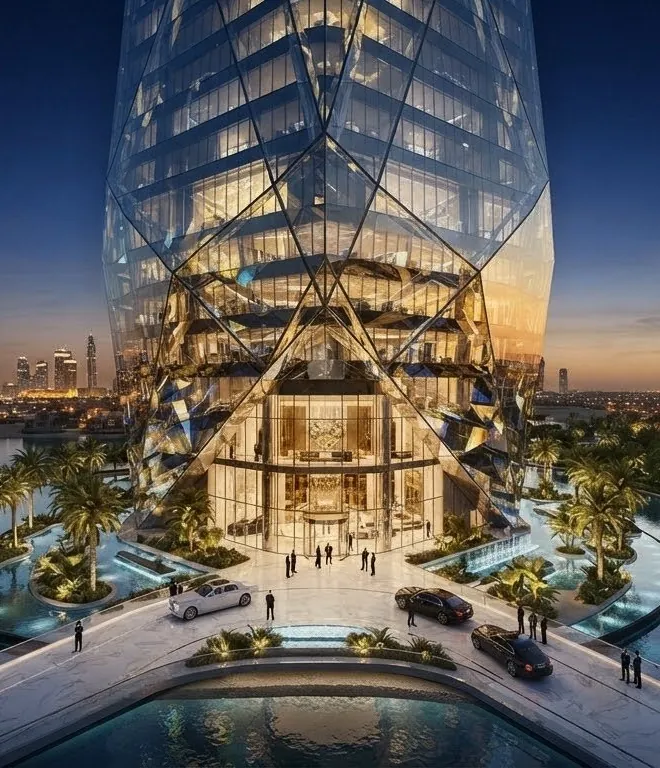
Toward a landmark demonstration
One structure, to set a new standard.
Picture the arrival. A private bridge across a still lagoon, a porte-cochère attended with absolute discretion, a lobby that rises several storeys like a jewel box.
Then the first sensation inside: clarity. Walls of uninterrupted transparency. Daylight that is natural and true in colour, with no heavy tint between you and the city. Outside, the desert sun is at full strength. Inside, the space is calm, luminous and cool.
This is the experience GateKeeper is being developed to make possible, and the reason its first expression is intended to be a single, singular, landmark-scale building in a high-sun environment.
It will not be a conventional structure wrapped in a new product. Working alongside architects and engineers, the building itself is intended to be configured around GateKeeper from the first line drawn, so that structure and facade perform as one.
Design is everything.
A statement of vision. It describes an intended experience, not a completed building or measured results.
Proprietary by design
GateKeeper exists. The engineering behind it remains ours.
This page is our public introduction to GateKeeper, not a technical disclosure. We describe what it is designed to achieve and keep how it achieves it private.
The technology, its intellectual property and the commercial opportunity are presented only to selected, qualified parties under appropriate confidentiality arrangements.
GATEKEEPERTechnical file
- Materialswithheld
- Processwithheld
- Geometrywithheld
- Configurationwithheld
- Manufacturing partnerswithheld
- Validation statuswithheld
Available under NDA to qualified parties
By invitation
A very select circle.
GateKeeper is offered on an exclusive basis. Opportunities are reserved for a very small group of qualified investors and development partners, and are presented privately under confidentiality.
If you represent a qualified investor, a family office or a developer of landmark architecture, we would welcome an introduction. Every briefing is arranged personally by leadership.
Statements on this site about technologies under development, future applications and commercial plans are forward-looking. They describe intent and research direction, not delivered products, verified performance or guaranteed outcomes.
Where GateKeeper stands
- EstablishedProprietary technology established
- NowAdvancing toward a landmark demonstration
- NextLandmark-scale architectural demonstration
Questions
How does GateKeeper work?
The engineering is proprietary and is not published. Qualified parties can request a private technical briefing under a confidentiality agreement.
Is GateKeeper available to buy or specify?
Not on the open market. GateKeeper is being advanced toward a single landmark demonstration, and opportunities are limited to a very small group of qualified investors and development partners.
Does GateKeeper only keep heat out?
No. It is also designed to let warmth that builds up inside migrate back out through the envelope, so energy keeps moving through the building rather than accumulating. And the landmark building is intended to be designed around GateKeeper with its architects and engineers, rather than a conventional structure wrapped in it.
How much could it reduce cooling demand?
GateKeeper is designed to reduce solar heat gain, which can lower cooling demand. The effect on any building depends on its climate, design and use, so we do not publish general figures.